William Booth and Catherine Mumford married at Stockwell Green Congregational Church on 17 June 1855. Their partnership would launch a movement that began in East London's slums and spread across the globe.
From Whitechapel to the World
Booth was born on 10 April 1829 in Nottingham to a family that descended into poverty during his childhood. After his father's death in 1842, he was apprenticed to a pawnbroker at age thirteen. He underwent religious conversion and moved to London in 1849, where he became a full-time preacher on his twenty-third birthday in 1852.
On 2 July 1865, Booth preached his first open-air sermon outside The Blind Beggar pub at 337 Whitechapel Road. That same year, he founded the Christian Revival Society, later renamed the East London Christian Mission. The movement held early meetings on Mile End Waste and in a tent erected on an old Quaker burial ground.
Catherine Booth's Vital Role
Catherine was born on 17 January 1829 in Ashbourne, Derbyshire, to Methodist parents. She had read the Bible through eight times before she turned twelve. After marriage, she raised eight children whilst pioneering women's ministry. In January 1860, she interrupted her husband's sermon at Gateshead to "say a word," marking her public preaching debut.
In 1859, she wrote "Female Ministry: Woman's Right to Preach the Gospel," defending women's religious leadership. She organised "Food for the Million" soup kitchens, established rescue homes for women, and designed The Salvation Army's flag and bonnets. She became known as the "Mother of The Salvation Army."
A New Name Is Born
In May 1878, the movement became The Salvation Army in a moment of happenstance. William Booth was dictating a letter to his secretary George Scott Railton, describing the organisation as a "volunteer army." Their son Bramwell overheard and declared, "Volunteer! I'm no volunteer, I'm a regular!" The word "volunteer" was crossed out and replaced with "salvation," giving the movement its enduring name.
Social Reform in Victorian East London
The Booths confronted dire conditions in East London during the 1880s. Contemporary accounts described "very poor, casual earnings, chronic want" throughout Whitechapel, with overcrowding and exploitation endemic. William Booth established a match factory in Old Ford paying four pence per gross, whilst larger firms paid only two and a half pence. His slogan read: "Lights in darkest England, security from fire, fair wages for fair work."
He also established the world's first free labour exchange, created a family tracing service that still operates today, and published "In Darkest England and the Way Out" in 1890. The book became a bestseller, proposing homes for the homeless, farm communities for urban poor, training centres for emigrants, and aid for those struggling with alcohol.
The Final Hackney Connection
Catherine Booth died on 4 October 1890 from breast cancer at Clacton-on-Sea. William Booth passed away on 20 August 1912 at his home in Hadley Wood. His body lay in state at Clapton Congress Hall in Hackney, where 150,000 people filed past his casket.
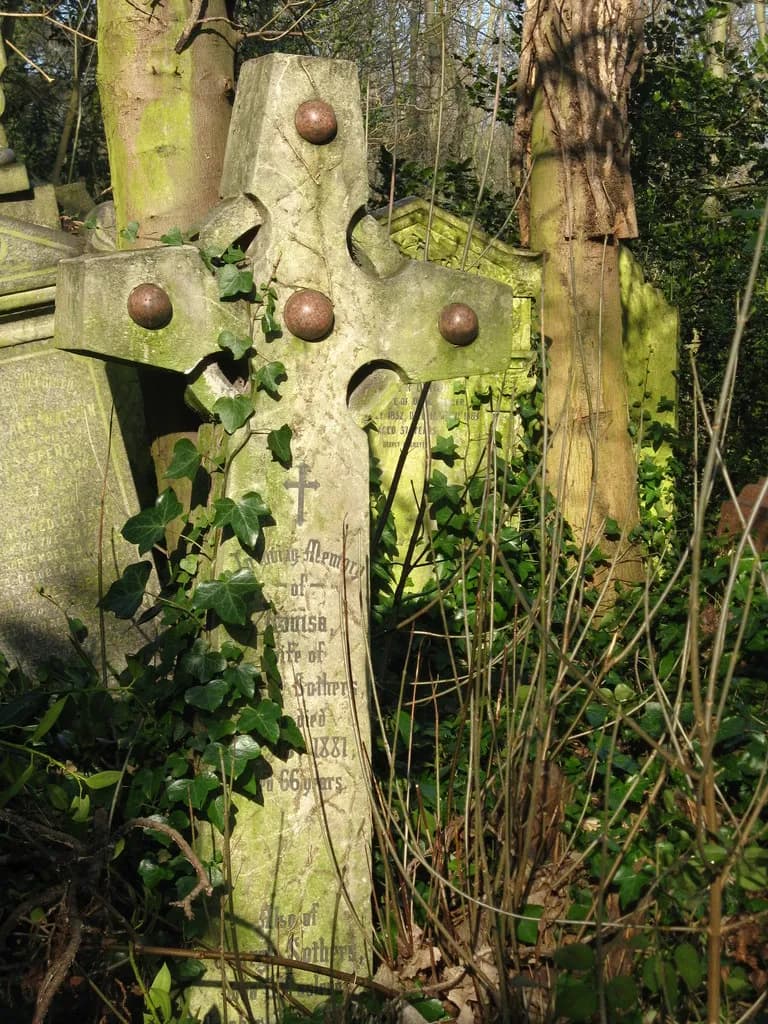
Both are buried at Abney Park Cemetery on Stoke Newington High Street, alongside their son Bramwell and numerous Salvation Army commissioners including George Scott Railton. The cemetery is a Local Nature Reserve and Conservation Area spanning 12.53 hectares.
From Local Movement to Global Force
By the time of William Booth's death, The Salvation Army had expanded to fifty-eight countries and colonies. The organisation is now present in 133 countries with over 1.7 million soldiers, officers, and adherents. It is one of the world's largest non-governmental providers of social services, assisting more than 32 million people in the United States alone in 2022.
Statues of William and Catherine Booth stand on Mile End Road near the site of the first Salvation Army meeting. William's statue was unveiled in 1979; Catherine's followed in 2015, donated by Salvation Army women in the United States to mark the organisation's 150th anniversary.