Abney Park Cemetery stands as a testament to Victorian radicalism in the heart of Stoke Newington. Founded in 1840, it became the first wholly non-denominational cemetery in Europe; a deliberate rejection of the religious divisions that characterised burial practices in 19th-century England.
A Revolutionary Approach to Burial
The cemetery opened on 3 June 1840, the creation of the Abney Park Cemetery Company led by solicitor George Collison II, architect William Hosking, and horticulturalist George Loddiges. Unlike London's other garden cemeteries, Abney Park was not consecrated as burial land and held no Act of Parliament specifically setting it aside for cemetery use. This made it unique among the "Magnificent Seven" garden cemeteries established around the capital in the 1830s and 1840s.
The founders consciously designed the cemetery with what sources describe as "no invidious dividing lines" separating the burial areas of one faith from any other. Where other cemeteries used the term "non-denominational" loosely to mean simply that they had allocated separate areas for different denominations, Abney Park genuinely welcomed all regardless of religious conviction. The Abney Park Chapel, completed in the same year, became the first non-denominational cemetery chapel in Europe and remains the oldest surviving example.
Architect William Hosking designed the chapel in what became known as "Dissenting Gothic" style; a single interdenominational cell arranged in a Greek cross plan, featuring ten-part rose stained glass windows and a 120-foot steeple that was the tallest in the district at the time of construction. The cemetery's Egyptian Revival entrance, designed by Hosking with Joseph Bonomi the Younger, features hieroglyphics that sources translate as signifying "Abode of the Mortal Part of Man."
Radical Stoke Newington
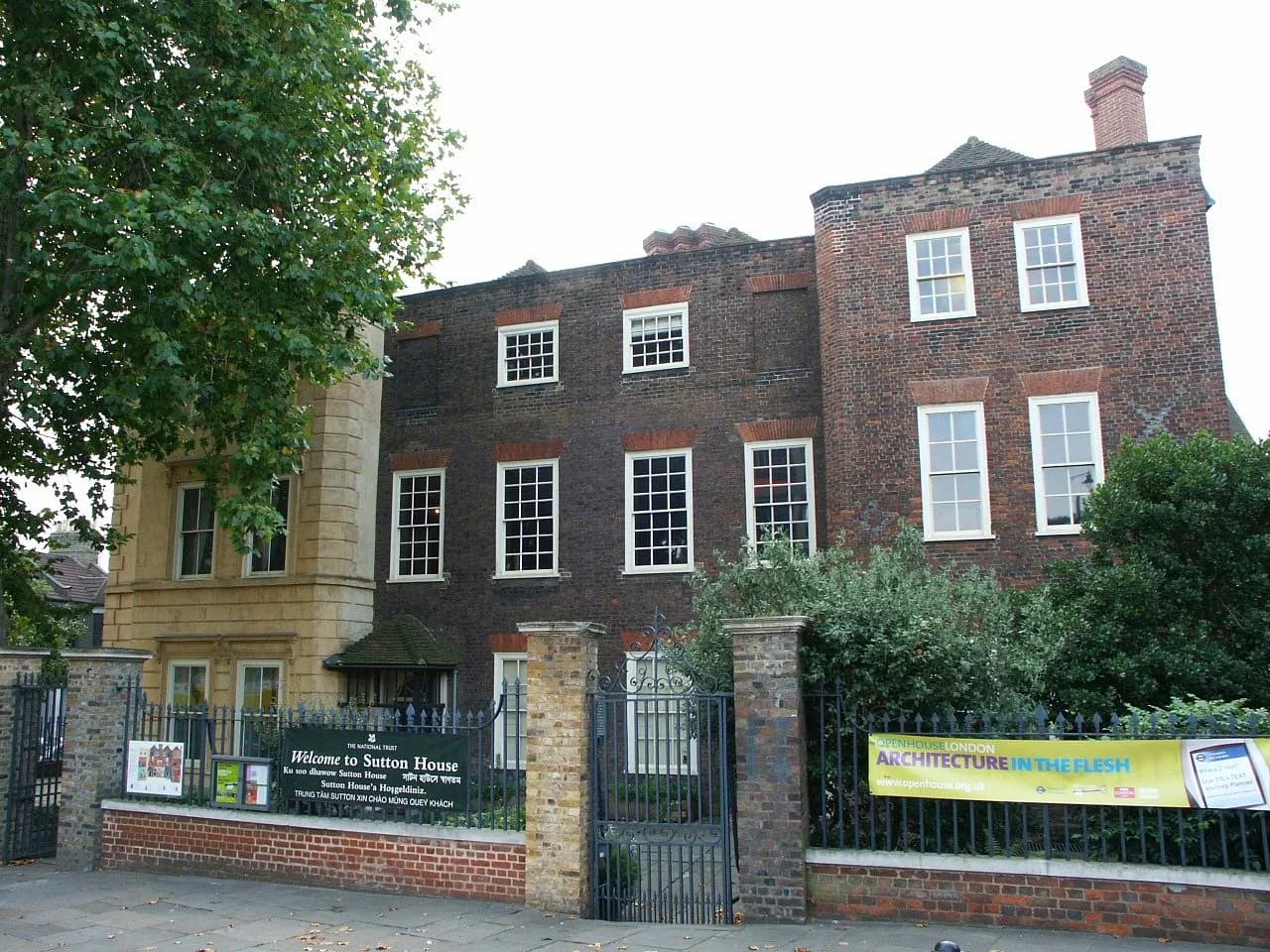
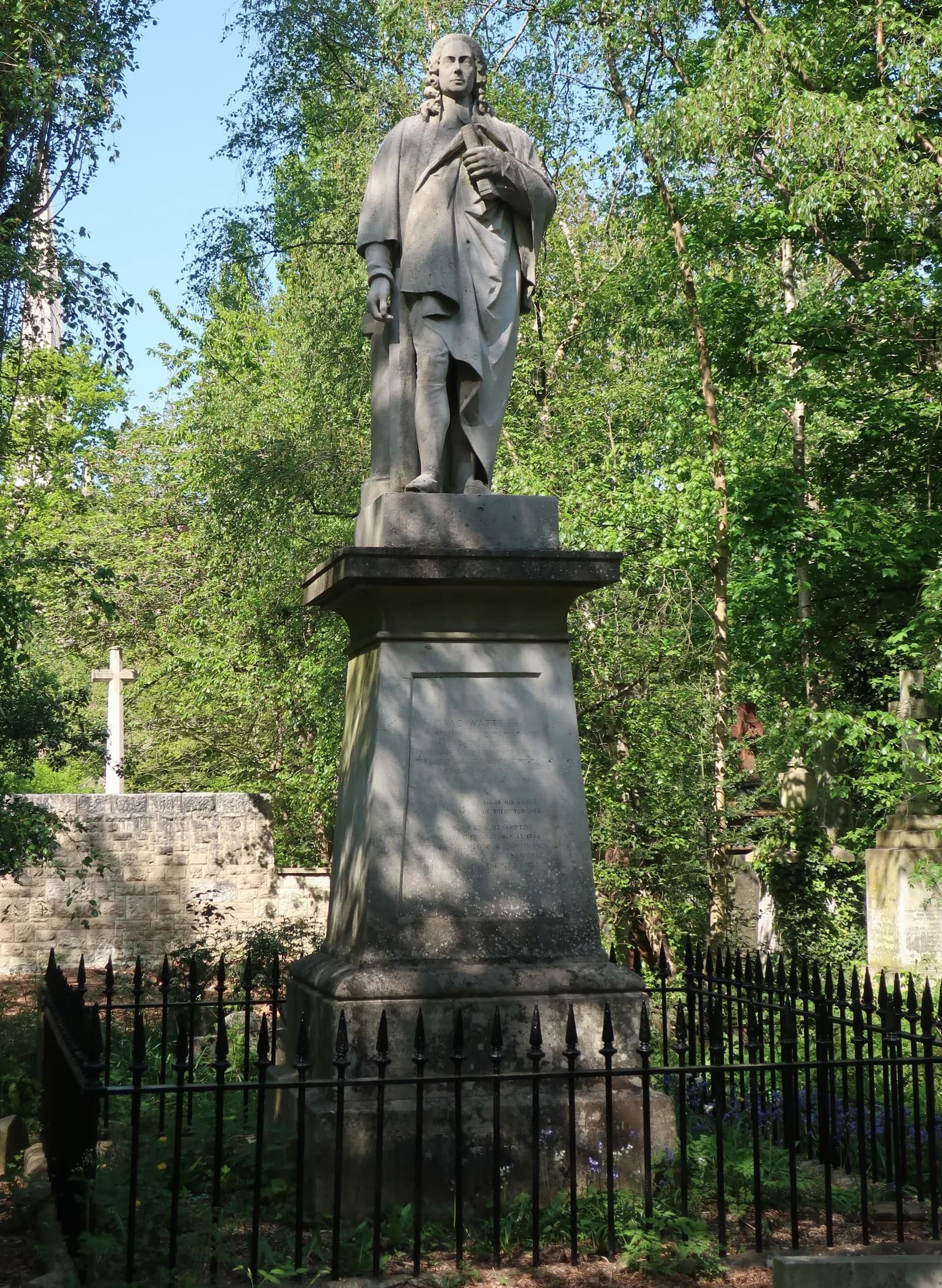
The cemetery's non-conformist ethos reflected the character of Stoke Newington itself. The site incorporated the former estates of Fleetwood House and Abney House; the latter was home in the early 18th century to Lady Mary Abney and Dr. Isaac Watts, the renowned nonconformist hymn writer whose statue now stands within the cemetery grounds. The area had long been associated with Quaker activity and progressive politics.
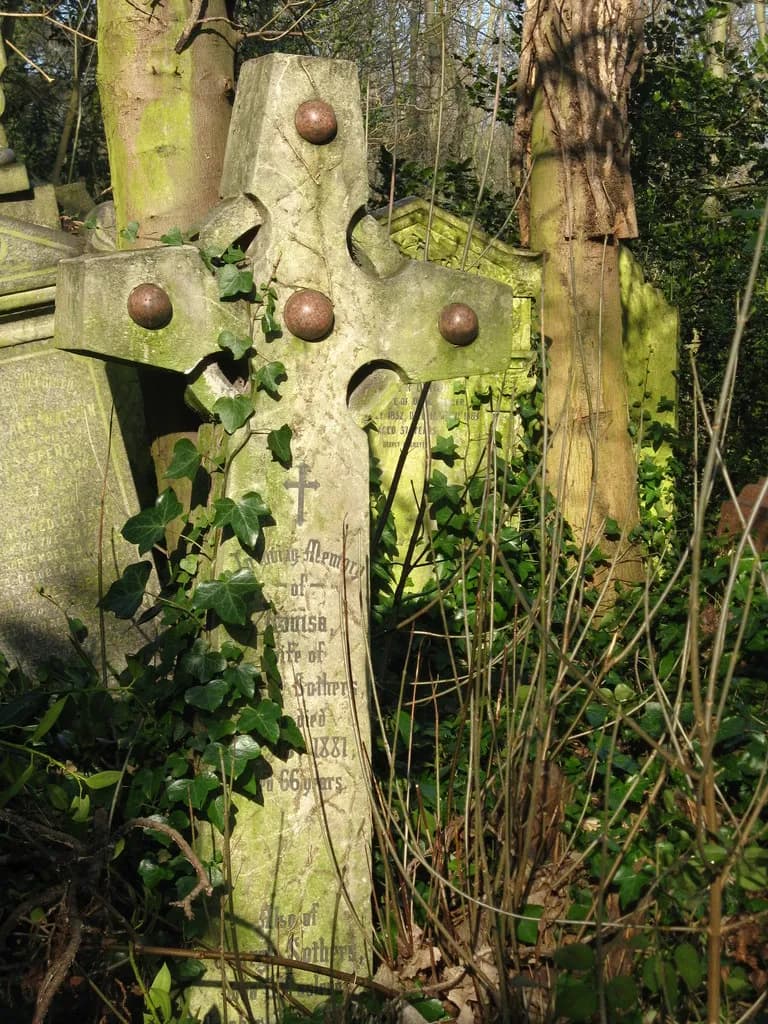
This heritage attracted those who shaped 19th-century social reform. Abney Park became known as the "Campo Santo of the Dissenters," the most important burial place in Britain for Congregational, Baptist, Methodist and Salvation Army ministers and educationalists. Among the approximately 200,000 people buried in around 60,000 graves are figures who changed the course of history.
William and Catherine Booth, founders of The Salvation Army, lie buried in a prominent location near Church Street. Thomas Binney, known as the "Archbishop of Non-conformity," rests close to the Church Street entrance. Christopher Newman Hall, who played a significant role in American Civil War slavery emancipation, is buried alongside his father. The Reverend James Sherman, who wrote the introduction to Harriet Beecher Stowe's Uncle Tom's Cabin, lies here, as does Aaron Buzacott, second Secretary of what became Anti-Slavery International.
Joanna Vassa, daughter of Olaudah Equiano, the former slave whose 1789 autobiography became a founding text of the abolitionist movement, is also buried at Abney Park. This concentration of abolitionist graves reflects Stoke Newington's historical position as a centre of radical nonconformist politics.
Botanical Ambition
The cemetery was originally laid out as an arboretum as well as a burial ground. George Loddiges arranged 2,500 trees and shrubs alphabetically around the perimeter, from A for Acer to Z for Zanthoxylum. The 12.53-hectare site remains one of London's most central woodlands, home to veteran trees, deadwood invertebrates, fungi, bats, tawny owls and sparrowhawks. Over 200 old trees from the original 1840 arboretum still stand.
Decline, Rescue and Renewal
By the mid-20th century, the cemetery had fallen into decline. It ceased to be a working cemetery for new burials, though occasional discretionary interments for families with existing deeds continue. In 1978, the London Borough of Hackney acquired the site for £1. Save Abney Park Cemetery, formed in 1974, evolved into the Abney Park Trust, which now manages the cemetery in partnership with the council.
The years of neglect had an unexpected benefit. Nature reclaimed large areas of the cemetery, creating the woodland ecosystem that led to its designation as a Local Nature Reserve in 1993. It is also listed Grade II on Historic England's Register of Parks and Gardens of Historic Interest.
Restoration and Community Use
A £5 million restoration project, completed in 2024 and funded by the National Lottery Heritage Fund, Hackney Council and Abney Park Trust, has transformed the site while preserving its essential character. The Grade II listed chapel received a new roof in 2017 and new stained glass windows and seating by 2024. New facilities include a café and public toilets at the main entrance, an education space, and an accessible entrance on Church Street. The project incorporated green roofs and biodiversity enhancements.
The restoration enabled the chapel's removal from the Heritage at Risk Register in 2024. The building is now available for community use, including weddings, funerals, exhibitions and performances. Monthly history tours take place on the first Sunday of each month, alongside bat walks, ecology walks and chapel open mornings.
Uncovering Lost Stories
The Abney Unearthed project ran from 2016 to 2023, involving volunteers in re-mapping over 200,000 burials, researching life stories and restoring missing burial records. The project added approximately 200 common graves to plot maps, recovering the histories of people whose contributions might otherwise have been forgotten.
A Continuing Legacy
Today Abney Park Cemetery functions as a public park, nature reserve, events venue and educational resource. Its location at the junction of Stoke Newington High Street and Rectory Road, with a smaller entrance on Church Street, makes it accessible to residents across Hackney.
The cemetery embodies the progressive spirit that has characterised Stoke Newington for centuries. From its founding as a deliberate rejection of religious division, through its role as the final resting place of those who fought slavery and advanced social reform, to its current incarnation as a community-managed heritage site and urban woodland, Abney Park remains a physical testament to radical ideas put into practice.
For Hackney residents, the cemetery offers not only a green space in an increasingly dense urban environment, but a connection to the nonconformist and abolitionist heritage that helped shape modern Britain. The restoration ensures this legacy will continue to inform and inspire future generations.