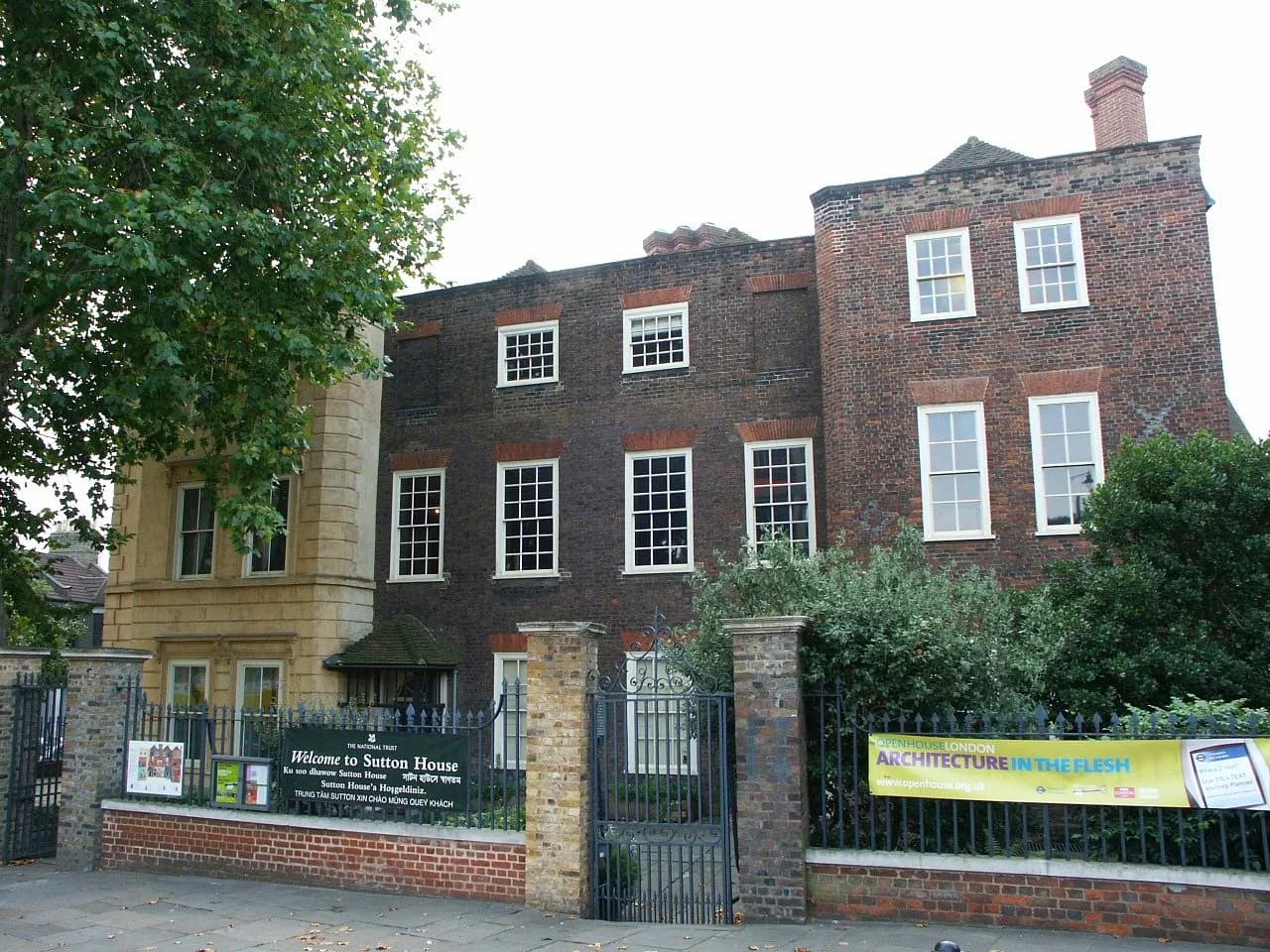
Sutton House stands as the oldest residential building in Hackney, a rare surviving example of Tudor architecture in East London. Built in 1535 by a principal advisor to Henry VIII, this Grade II* listed manor house has weathered centuries of change, periods of neglect, and the threat of demolition.
A Secretary's Residence
Sutton House was constructed in 1535 by Sir Ralph Sadler, who served as Principal Secretary of State to Henry VIII. The building was originally known as "Bryck Place" and represents a rare example of red-brick construction from the Tudor period. Its original H-plan structure would have marked it as a residence of considerable status in what was then rural Hackney, far from the noise and pollution of the City of London.
The house remained a private residence for centuries, passing through various owners as Hackney transformed from farmland to a densely populated urban area. By the twentieth century, however, the building faced an uncertain future.
National Trust Intervention
The National Trust acquired Sutton House during the 1930s, recognising its architectural and historical significance. Yet ownership by a heritage organisation did not guarantee immediate security. Like many historic buildings in rapidly developing areas, Sutton House struggled to find a sustainable purpose.
The situation reached a crisis point during the mid-1980s when the building was squatted. For a period, it operated as the "Blue House," functioning as a music venue and social centre. While this episode brought the building into use, it also highlighted the challenges of maintaining historic properties in areas facing economic pressures.
Restoration and Opening
Significant renovation work began in the late 1980s and continued through the early 1990s. The restoration was completed in 1991, and Sutton House opened to the public in 1994 after decades of intermittent use and uncertainty.
Today, the National Trust manages both Sutton House and the adjoining Breaker's Yard. The property serves as a cultural venue, hosting exhibitions, events, and educational programmes that connect Hackney residents with their local heritage.
Why It Matters
Sutton House offers Hackney residents and visitors a tangible link to the sixteenth century. As the borough continues to develop at pace, the manor house provides a fixed point of reference, a structure that has witnessed the transformation of Homerton from rural estate to urban neighbourhood.
The building's survival is particularly notable given the destruction of so much of Hackney's early architectural heritage. The medieval church that once served the parish was demolished in 1797; only its fourteenth-century tower remains on Mare Street. Other Tudor and Stuart buildings have disappeared as housing estates and commercial developments replaced them.
Visiting Sutton House
The property is located on Homerton High Street, accessible by bus and within walking distance of Homerton Overground station. Visitors can explore the Tudor interiors, view exhibitions on local history, and attend events ranging from craft workshops to historical talks.
The National Trust's management of the site reflects a broader pattern in East London, where heritage organisations work to preserve significant buildings amid rapid urban change. Other properties under similar management in the capital include Rainham Hall in Havering and Osterley Park in Isleworth.